
Women Empowerment
Women Empowerment in India
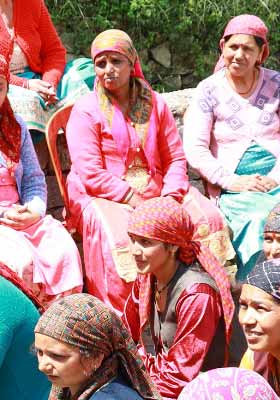
Empowering women and improving their social, health, political, and economic well-being is crucial for its own sake and essential for sustainable development. Power imbalances hinder women’s well-being at all levels of society. The majority of rural women work — but most of that work is invisible. Agricultural labour, child-rearing, cooking, and caregiving are unpaid and unrecognized. Achieving change requires policies and programs that improve women’s access to secure livelihoods and economic resources, reduce their disproportionate burden of housework, remove legal barriers to public participation, and raise social awareness through education and communication.
Empowering Communities, Enabling Change
Our approach centers on partnership, not just provision. We collaborate with rural residents to build the leadership and networks necessary for self-reliance. From tackling shared infrastructure challenges to advocating for social rights, we help communities create home-grown solutions that drive measurable, lasting progress.
Our Initiative
Please write couple of lines content here.
- The Education & Skills Gap: Limited access to quality education and vocational training leaves women without the skills needed for modern employment or advanced agricultural techniques. Many remain illiterate or semi-literate, restricting their ability to navigate financial systems or advocate for their rights.
- Economic Dependence & Poverty Trap: Without access to credit, land ownership, or formal employment opportunities, women remain financially dependent on male relatives. This dependence perpetuates cycles of poverty and limits their decision-making power within the household.
- Social & Structural Barriers: Deep-rooted gender norms often exclude women from community leadership and public life. Lack of confidence, limited mobility, and absence of role models prevent them from breaking traditional roles, even when economic opportunities arise.
- Pillar 1: Education & Skill Development: Basic education combined with digital literacy training to help women access market information, government schemes, and online banking. Tailored training in high-demand sectors such as sustainable agriculture, artisanal crafts, healthcare assistance, and small-scale entrepreneurship.
- Pillar 2: Economic Empowerment & Financial Inclusion: Facilitating the formation of women’s SHGs to provide access to micro-loans, savings mechanisms, and financial literacy training. Connecting women producers directly to broader markets, eliminating middlemen and ensuring fair prices for their agricultural and crafted goods. Providing seed funding and mentorship for women-led startups in rural areas.
- Pillar 3: Leadership & Community Engagement: Training women in public speaking, negotiation, and civic engagement to prepare them for roles in local governance (Panchayats) and community organizations. Conducting awareness campaigns to engage men and boys as allies in gender equality, reducing resistance and fostering supportive home environments.
- For Women: Financial Independence & Dignity: Participants will see a measurable increase in household income through new skills and market access. Women will gain control over their earnings, leading to greater decision-making power in family matters, including health and education choices. Enhanced self-esteem and leadership capabilities, enabling women to speak up against discrimination and advocate for their rights.
- For Families: Better Health & Education: Studies show that women reinvest up to 90% of their income into their families. This leads to better nutrition, higher school enrolment rates for children (especially girls), and improved healthcare outcomes. Sustainable income streams break the intergenerational cycle of poverty.
- For Communities & Nation: Women-led enterprises stimulate local economies, creating jobs and increasing community resilience. Empowered women become agents of change, promoting peace, hygiene, and education within their villages.
- National Progress: By unlocking the potential of half the population, we contribute directly to India’s economic growth and sustainable development goals (SDGs).
- 1 Safety: 200 Solar Street Lights have ended the "sunset lockdown" for 11,000+ residents, providing a zero-cost security layer.
- 2 Wellness: Targeted 09 health camps have provided critical care to 1000+ vulnerable men, women and children establishing a baseline for community longevity.
- 1 Environment
- 2 Wellness: Targeted 09 health camps have provided critical care to 1000+ vulnerable men, women and children establishing a baseline for community longevity.
Testimonials
Card Title
Card Title
Card Title
Card Title
Card Title